Earthquake seismology · Caltech

Imaging earthquakes.
Understanding
rupture.

I’m Liuwei Xu, a seismologist exploring how earthquakes start, propagate, and stop—from complex fault systems to supershear ruptures.

CALTECHPostdoctoral Scholar
Seismological Laboratory · Pasadena, CA
EARTHQUAKES, IN FOCUS01 — 05

01 / Selected research

The physics behind
the rupture.

I combine seismic observations, satellite geodesy, and source modeling to connect what we observe at the surface with what happens on a fault.

What keeps a
rupture supershear?

The 2025 Mandalay earthquake offers a window into sustained supershear rupture. Seismic imaging and geodetic observations reveal how contrasting materials across a fault and a favorable energy balance helped maintain exceptionally fast rupture.

SupershearRupture dynamics
Read the Science paper

Rupture imaging and propagation · Xu et al. (2025)
Authors’ figure archive ↗ · CC BY 4.0

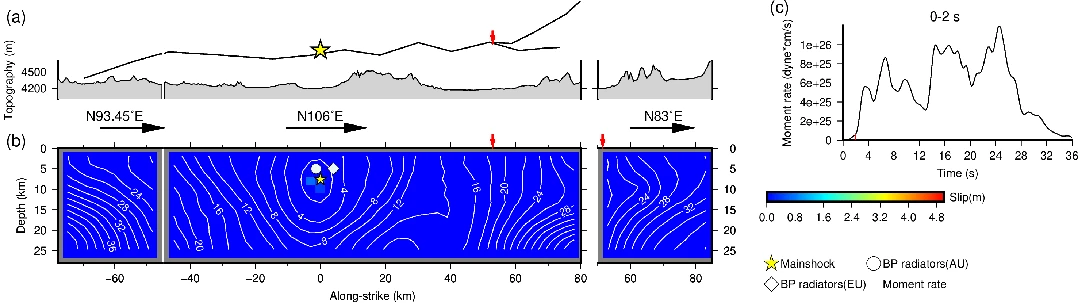
One asperity.
Two rupture initiations.

A strong fault patch resisted earlier swarms and slowed the initial rupture. A second initiation on the other side enabled rupture fronts to encircle the asperity—revealing how a barrier can shape a major earthquake.

Explore the study ↗

Looking through
the Earth’s core.

Most large seismic arrays are in the Northern Hemisphere. PKIKP back-projection uses waves that travel through Earth’s core to extend rupture imaging to earthquakes beyond the reach of conventional P-wave observations.

Explore the method ↗

NATURE GEOSCIENCE · 2022

Supershear is
more widespread
than we thought.

A systematic global search revealed supershear rupture in at least 14% of the large, shallow strike-slip earthquakes studied from 2000–2020, with oceanic events occurring as frequently as continental ones.

Read the global study ↗

Bao & Xu et al. · Equal contribution

Across complex fault systems

MORE CASE STUDIES
2025Unzipping a conjugate fault systemHualien, Taiwan, China · GRL+

The 2024 Mw 7.4 Hualien earthquake illuminates how rupture unfolds across a conjugate fault system. Combining complementary observations helps resolve fault geometry and the sequence of fault activation.

Read the paper ↗
2023A bilateral rupture on bifurcating faultsMaduo, China · JGR+

Seismic and geodetic observations resolve a bilateral rupture along a roughly 160 km fault system in the 2021 Mw 7.4 Maduo earthquake, including branching near its eastern end.

Read the paper ↗
Maduo earthquake slip evolution, back-projection locations and source time function
2023Following rupture across fault segmentsTürkiye · CEE+

The 2023 Mw 7.8 Kahramanmaraş earthquake ruptured multiple fault segments. Joint observations reveal its overall subshear propagation and the complexity of rupture across a large continental fault network.

Read the paper ↗

02 / Publications

Research,
in print.

Earthquake observations, source physics, and new ways to image rupture.

Google Scholar ↗
9 publications
2023
Communications Earth & EnvironmentFirst author

The overall-subshear and multi-segment rupture of the 2023 Mw7.8 Kahramanmaraş, Turkey earthquake in millennia supercycle

Citation

Xu, L., Mohanna, S., Meng, L. Ji, C., Ampuero, J.-P., Yunjun, Z., Hasnain, M., Chu, R., Liang, C. (2023). The overall-subshear and multi-segment rupture of the 2023 Mw7.8 Kahramanmaraş, Turkey earthquake in millennia supercycle. Communications Earth & Environment, 4, 379. https://doi.org/10.1038/s43247-023-01030-x

↗
2022
Nature GeoscienceCo-first author

Global frequency of oceanic and continental supershear earthquakes

Citation

Bao, H.,† Xu, L.,†(co-first author), Meng, L., Ampuero, J.-P., Gao, L., Zhang, H. (2022). Global frequency of oceanic and continental supershear earthquakes. Nature Geoscience, 15, 942–949. https://doi.org/10.1038/s41561-022-01055-5

↗
2022
ScienceCo-author

Citizen seismology helps decipher the 2021 Haiti earthquake

Citation

Calais, E., Symithe, S., Monfret, T., Delouis, B., Lomax, A., Courboulex, F., ... & Xu., L., Meng, L. (2022). Citizen seismology helps decipher the 2021 Haiti earthquake. Science, eabn1045. https://www.science.org/doi/full/10.1126/science.abn1045

↗

† Equal contribution where indicated in the citation. Full publication records are also available on Google Scholar.

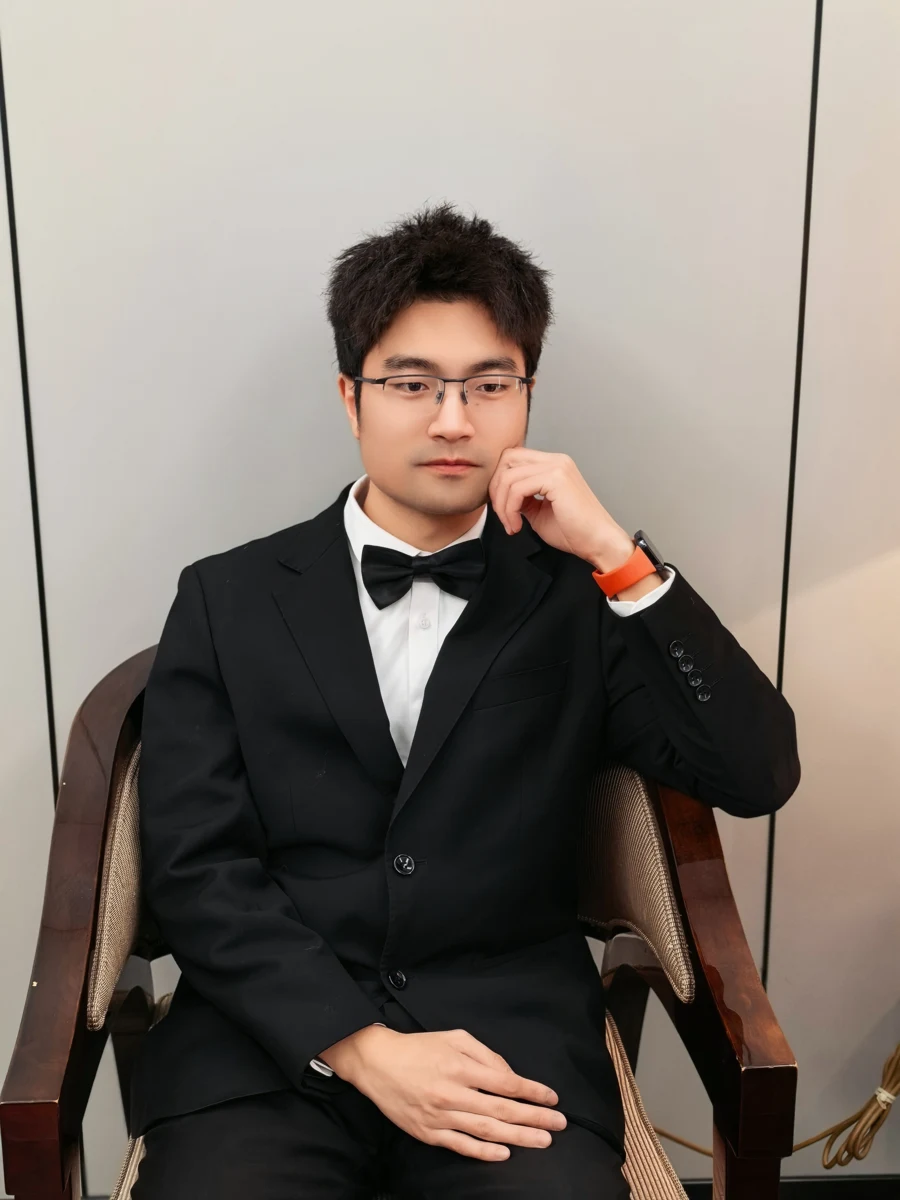
Portrait of Liuwei Xu
LIUWEI XU徐浏威

03 / About me

Curious about
a moving Earth.

I’m a postdoctoral scholar at the California Institute of Technology, working in the Seismological Laboratory and the Division of Geological and Planetary Sciences.

My research spans continental faults, subduction zones, and oceanic transform boundaries. I use seismic and geodetic data to study earthquake source processes, and connect observations with modeling to understand the mechanics of rupture.

I received my PhD from UCLA and my BS from Zhejiang University. I’m especially interested in supershear earthquakes, the role of fault asperities, and new approaches to global source imaging.

View my curriculum vitae ↗

Education & appointments

  1. 2026 — PRESENT

    California Institute of Technology

    Postdoctoral Scholar · Seismological Laboratory

  2. 2020 — 2025

    University of California, Los Angeles

    PhD · Earth, Planetary, and Space Sciences

  3. 2016 — 2020

    Zhejiang University

    BS · Earth Sciences

Honors & recognition

  • 2024
    John W. West Research AwardUCLA
  • 2024
    UC President’s Dissertation Year Award
  • 2024
    SSA Travel Grant for Graduate Students
  • 2023
    School on Subduction Zone Processes Travel Grant
Earlier honors +
  • 2019 · Shizhe-Suya Award, School of Earth Sciences, Zhejiang University
  • 2019 · Third Prize, National Mathematics Competition for College Students
  • 2018 · Outstanding Student Scholarship, Second Prize in Academic, Zhejiang University
Invited talks +
  • 2025.08 Brown Bag Seminar, Caltech
  • 2024.12 euSCI Geophysics Seminar, Peking University
  • 2024.12 School of Geosciences and Info-Physics, Central South University
  • 2024.12 School of Earth Sciences, Zhejiang University
  • 2024.09 Youth Forum, China Earthquake Administration
  • 2023.11 Lithospheric Dynamics Seminar Series, University of Southern California
  • 2023.08 School of Earth Sciences, Zhejiang University
  • 2023.08 School of Earth and Ocean Sciences, Tongji University
Teaching & service +
  • Teaching Fellow Remote Sensing in Earth Science (EPS-SCI 150), UCLA, Fall 2024
  • Teaching Associate Introduction to Earth Science (EPS-SCI 1), Fall 2023; Earthquake (EPS-SCI 8), Spring 2023
  • Teaching Assistant Earthquake (EPS-SCI 8), UCLA, Winter 2021 and Fall 2022
  • Peer review NSF proposals; GRL, JGR, GJI, Seismica, and other journals
Research software +

04 / Updates

Along
the way.

Mandalay earthquake study in Science

Our work on the 2025 Myanmar earthquake was featured as a cover article.

View the issue ↗

Doctoral dissertation defended

A milestone in my PhD journey at UCLA.

Noto earthquake study on the cover of Science

Our study explores dual-initiation ruptures around a fault asperity.

View the issue ↗

UC President’s Dissertation Year Award

Selected as a recipient of the dissertation fellowship.

Science moves through conversation.

Let’s talk
earthquakes.

xuliuwei@caltech.edu ↗

Seismological Laboratory
California Institute of Technology
Pasadena, California

RESEARCH FIGURE

Open original ↗